☛ Cette critique est aussi disponible en français [➦].
Translated by Gabrielle Baillargeon-Michaud.
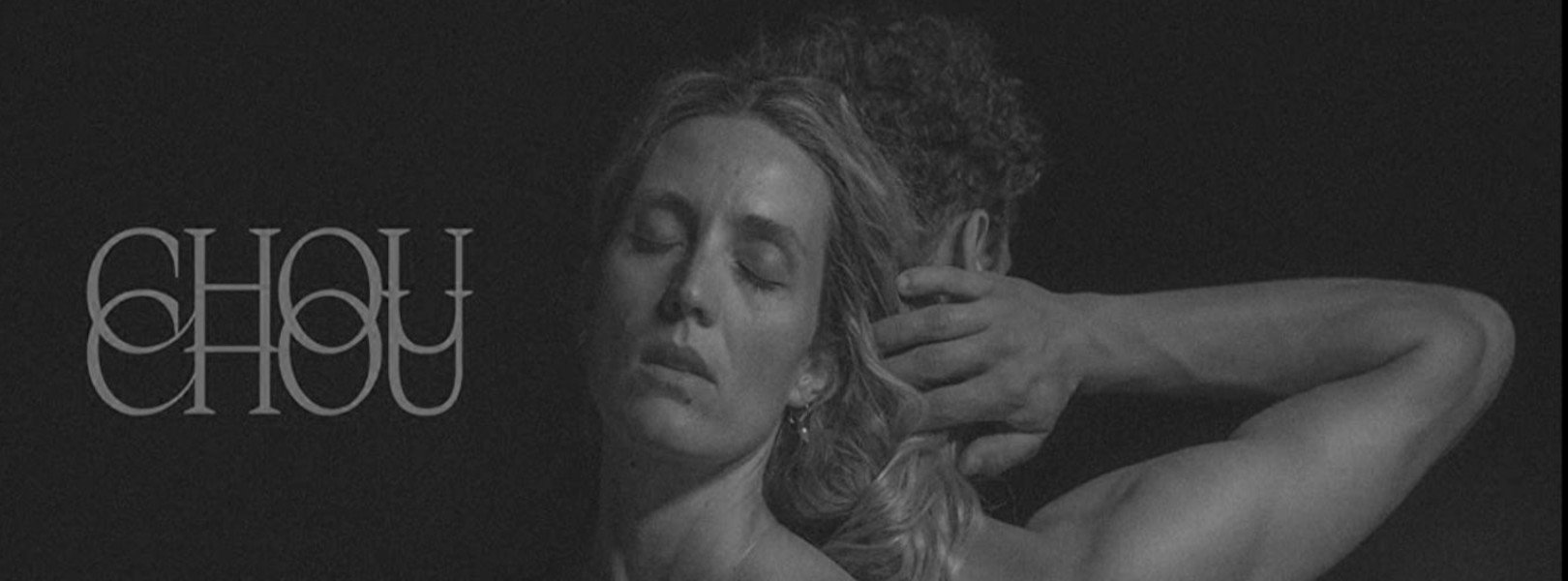
Typically creating for a youth audience, Simon Boulerice aptly ventured into writing Chouchou, a drama television series intended for audiences over 13 years old. The show narrates the story of a forbidden love affair between Chanelle (Evelyne Brochu), a 37-year-old high school French teacher, and her 17-year-old student, Sandrick (Lévi Doré).
From the outset, the Quebec-based series depicts Chanelle’s arrest, bringing to the fore the illegal nature of the teacher’s relationship with her student. Boulerice then recounts the onset of this unlawful relationship, during which Chanelle tries to maintain distance from her student. The production team (Félix Tétreault and Marie-Claude Blouin) illustrates how the protagonist deals with this situation alongside her two children, her husband Jeff (Steve Laplante), her sister (Pascale Renaud Hébert), and her coworkers.
Without justifying the teacher’s reprehensible actions, the series delicately explores the situation’s complexity and various blind spots. The nuanced portrayal of the characters enables the audience to empathize with Sandrick, a victim of this toxic relationship, and Chanelle, who allowed the situation to spiral out of control too quickly. Chouchou’s writer refers to this as “critical empathy”¹ toward the teacher.
Chouchou also offers a broad platform for sexological reflections, particularly on themes such as sexual offending, love, desire, interpersonal and family relationships, and motherhood. Simon Boulerice effectively and brilliantly illustrates the various consequences that can arise from sexual acts committed by an adult, who is trusted by and holds a position of power over a minor. Chanelle’s actions have legal, interpersonal, and individual repercussions. The protagonist, therefore, suffers the consequences of her actions and sees her victim, her loved ones, and herself emotionally affected by the situation. Throughout the season, Chanelle’s sister serves as the voice of reason, making Chanelle realize that Sandrick is the victim. Boulerice compassionately portrays the psychological progression of both Chanelle and Sandrick. At the beginning of the series, Chanelle feels little guilt toward her victim, instead believing that they are providing mutual comfort. However, as the story progresses, Chanelle becomes aware of the serious consequences her actions have had on Sandrick. She eventually chooses to apologize to him when the circumstances allow, within a restorative justice framework².
The series also provides a comprehensive view of the different options available to the victim, where all paths seem to lead to a dead end. Additionally, without downplaying the negative consequences of this relationship on the protagonist, the series showcases that this experience of adversity has still facilitated his psychological growth.
Although the series effectively portrays an intention to reintegrate Chanelle socially, addressing sexual offending through the lens of entertainment is fraught with challenges. Despite the nuanced depiction of Chanelle and Sandrick’s relationship, it remains illegal. Moreover, the public might have perceived the series differently if Chanelle were a man in a position of trusted authority over a female teenager. Sexual violence against boys and men is often misunderstood, and stereotypes about masculinity can contribute to a romanticized interpretation of this series, rather than acknowledging it as a clear-cut case of sexual abuse.
Overall, Chouchou and the exceptional performances of Evelyne Brochu and Lévi Doré immerse us in the characters’ emotional turmoil. The protagonists swiftly face a dilemma within Quebec’s socio-legal framework. This is where the series truly excels: it thrusts the audience into a morally and ethically challenging position.
***
¹ Simon Boulerice explains that it is possible to feel empathy for the protagonist, but that this empathy can and should be nuanced. https://ici.radio-canada.ca/tele/on-va-se-le-dire/site/segments/chronique/421558/simon-boulerice-amoureux-enseignante-sexualite (Émission du lundi 7 novembre (On va se le dire)
² According to Éducaloi, restorative justice is a process that encourages offenders to take responsibility for the consequences of their actions and to make amends for the harm or damage caused by a crime. Restorative justice can complement or serve as an alternative to the traditional justice system.
Référence
Director/creator : Simon Boulerice (writing); Félix Tétreault et Marie-Claude Blouin (direction)
Title : Chouchou
Date : September 2022This series is available on Crave.